

Pharmageek
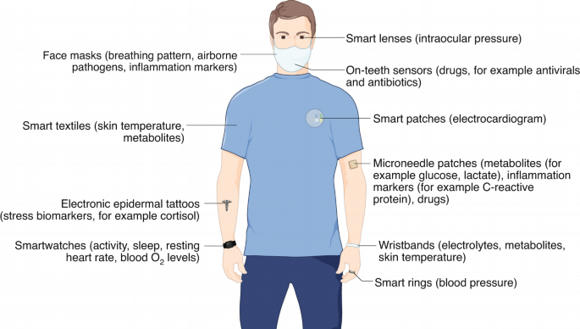
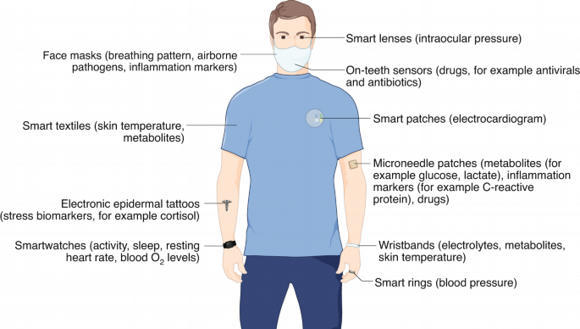
Wearable electronic devices, which allow physiological signals to be continuously monitored, can be used in the early detection of asymptomatic and pre-symptomatic cases of COVID-19.
Lire l'article complet sur : www.nature.com
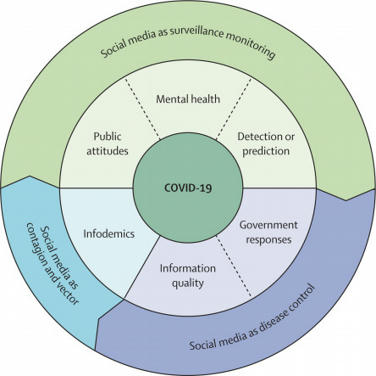
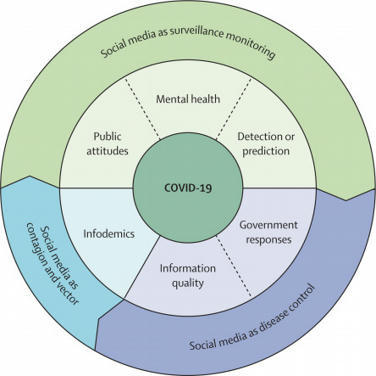
With the onset of the COVID-19 pandemic, social media has rapidly become a crucial
communication tool for information generation, dissemination, and consumption. In
this scoping review, we selected and examined peer-reviewed empirical studies relating
to COVID-19 and social media during the first outbreak from November, 2019, to November,
2020. From an analysis of 81 studies, we identified five overarching public health
themes concerning the role of online social media platforms and COVID-19. These themes
focused on: surveying public attitudes, identifying infodemics, assessing mental health,
detecting or predicting COVID-19 cases, analysing government responses to the pandemic,
and evaluating quality of health information in prevention education videos.
Lire l'article complet sur : www.thelancet.com
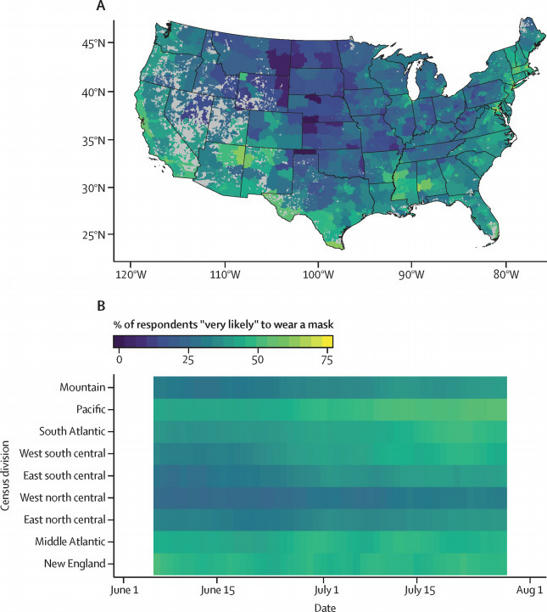
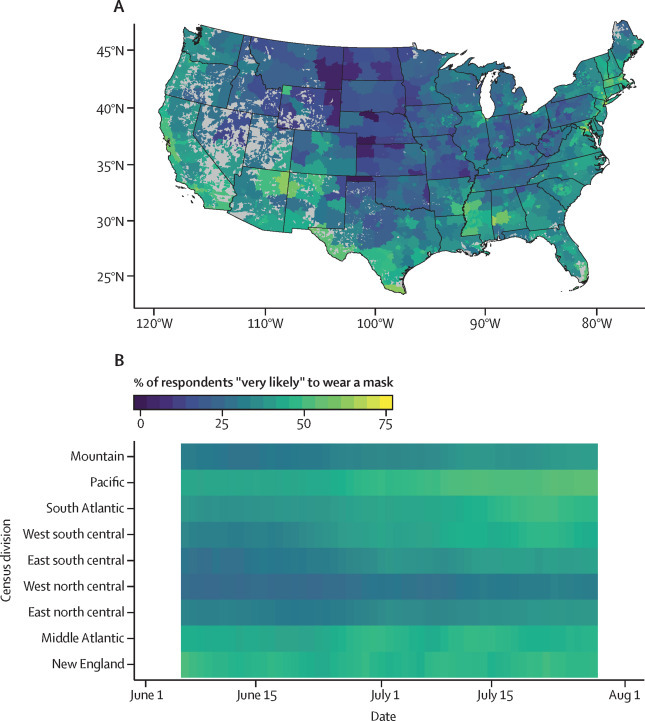
The widespread reported use of face masks combined with physical distancing increases
the odds of SARS-CoV-2 transmission control. Self-reported mask-wearing increased
separately from government mask mandates, suggesting that supplemental public health
interventions are needed to maximise adoption and help to curb the ongoing epidemic.
Lire l'article complet sur : www.thelancet.com
L'hôpital privé Gustave Roussy utilise un outil "AI-Severity" qui attribue un score de gravité grâce à l'analyse automatisée d'un scanner des poumons et de plusieurs variables biologiques d'un patient atteint du Covid-19. Cet algorithme a été développé en partie par la start-up Owkin. L'objectif est d'éviter de passer à côté de cas graves qui en apparence ne le sont pas forcément.
Lire l'article complet sur : www.usine-digitale.fr