

Pharmageek


We are in the midst of dual crises: COVID-19 and climate change. Both have led to
a substantial loss of life, disproportionately affected vulnerable and disadvantaged
individuals, and pushed some health-care systems to the maximum. The 2020 report of
The Lancet Countdown on health and climate change emphasises the need for responses
to these crises to be aligned, in order to tackle them successfully. What role can
technology play in helping us win these battles?
Lire l'article complet sur : www.thelancet.com


Your inbox probably has more invitations to join online health research surveys than
before the COVID-19 pandemic. Online surveys have become an important tool for COVID-19
research when conventional survey methods are not feasible. Yet the response to COVID-19
has also underlined the urgent need for high-quality behavioural data. Is the trend
towards online health survey research an indication of practices to come or a stark
reminder of the perils of convenient sampling methods? This Comment examines unique
opportunities associated with online health research surveys, challenges in implementing
and interpreting data from online surveys, and considerations for getting the most
out of online health research.
Lire l'article complet sur : www.thelancet.com


On July 27, 2020, former US President Donald Trump retweeted to his then 84 million
Twitter followers an online video, published by the Breitbart website, promoting misinformation
about the anti-malarial drug, hydroxychloroquine.1 The video, featuring Dr Stella
Immanuel and a group called America's Frontline Doctors, falsely claimed that the
combination of hydroxychloroquine, zinc, and azithromycin (an antibiotic) could cure
COVID-19.1 Twitter subsequently removed President Trump's retweet, temporarily suspended
and removed tweets from his son, Donald Trump Jr, and removed and suspended other
accounts sharing this false information as a violation of its COVID-19 misinformation
policy.
Lire l'article complet sur : www.thelancet.com
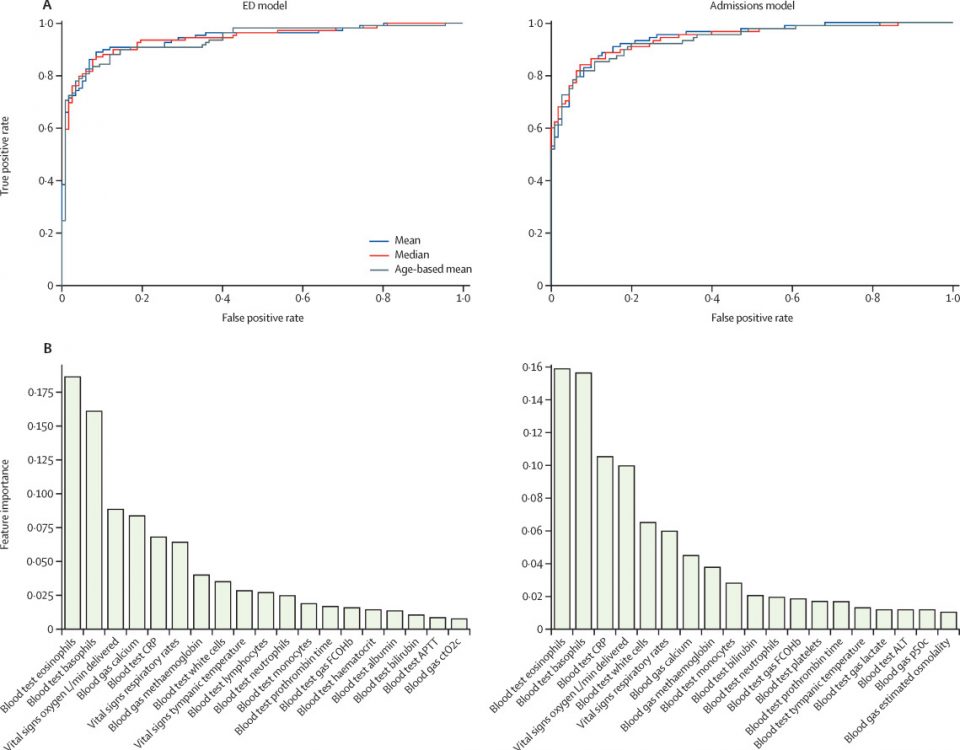
Our models performed effectively as a screening test for COVID-19, excluding the illness
with high-confidence by use of clinical data routinely available within 1 h of presentation
to hospital. Our approach is rapidly scalable, fitting within the existing laboratory
testing infrastructure and standard of care of hospitals in high-income and middle-income
countries.
Lire l'article complet sur : www.thelancet.com