

Pharmageek
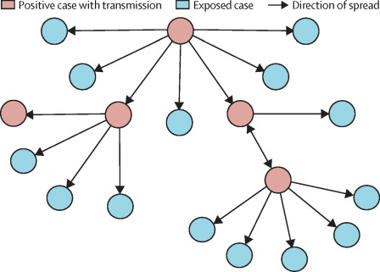
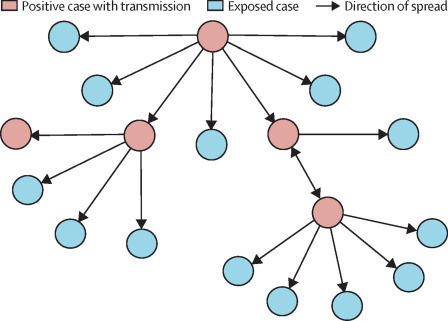
At the onset of the COVID-19 pandemic in early March, 2020, it became apparent that
non-electronic exposure investigations would not meet the demands required by the
mounting number of employees with COVID-19 in the Mount Sinai Health System in New
York City (NY, USA), a multicentre, academic medical institution and hospital system.
New York City was an epicentre early in the pandemic, resulting in a peak of more
than 6000 cases daily and more than 1000 deaths per day.1 Agile exposure investigation
and contact tracing were crucial to containing the spread of COVID-19 among hospital
staff.
Lire l'article complet sur : www.thelancet.com


L’efficacité des futures actions et politiques de santé dépendra de la bonne prise en compte des interconnexions entre santés humaine, animale et des écosystèmes. C’est le constat sans appel des membres du Conseil scientifique covid-19, qui publient dans The Lancet une feuille de route pour la mise en pratique de ces approches globales de la santé, appelées « One Health ».
Lire l'article complet sur : www.cirad.fr
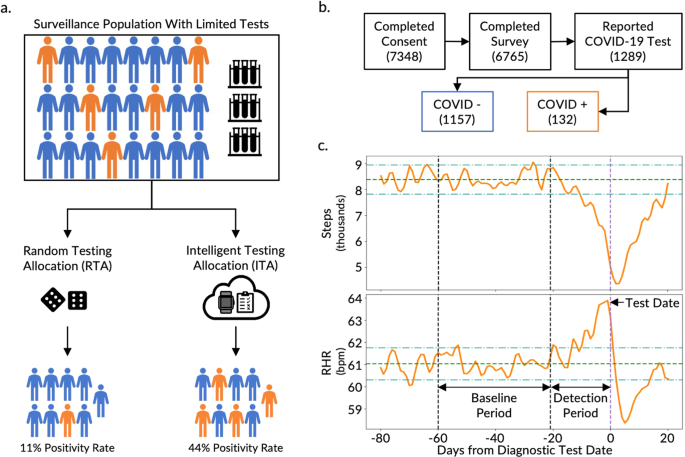
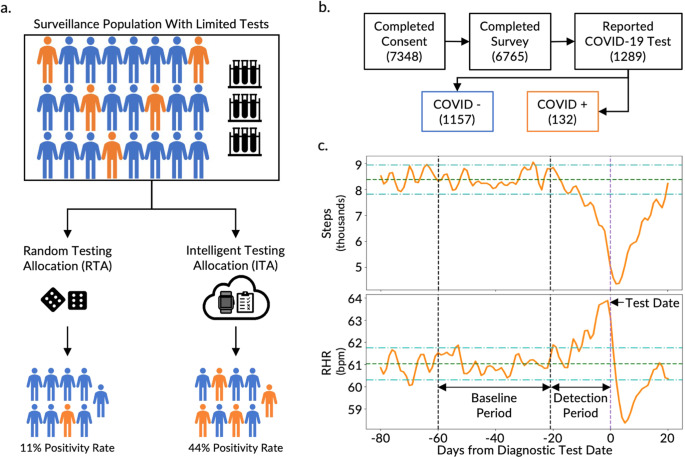
Mass surveillance testing can help control outbreaks of infectious diseases such as COVID-19. However, diagnostic test shortages are prevalent globally and continue to occur in the US with the onset of new COVID-19 variants and emerging diseases like monkeypox, demonstrating an unprecedented need for improving our current methods for mass surveillance testing. By targeting surveillance testing toward individuals who are most likely to be infected and, thus, increasing the testing positivity rate (i.e., percent positive in the surveillance group), fewer tests are needed to capture the same number of positive cases. Here, we developed an Intelligent Testing Allocation (ITA) method by leveraging data from the CovIdentify study (6765 participants) and the MyPHD study (8580 participants), including smartwatch data from 1265 individuals of whom 126 tested positive for COVID-19. Our rigorous model and parameter search uncovered the optimal time periods and aggregate metrics for monitoring continuous digital biomarkers to increase the positivity rate of COVID-19 diagnostic testing. We found that resting heart rate (RHR) features distinguished between COVID-19-positive and -negative cases earlier in the course of the infection than steps features, as early as 10 and 5 days prior to the diagnostic test, respectively. We also found that including steps features increased the area under the receiver operating characteristic curve (AUC-ROC) by 7–11% when compared with RHR features alone, while including RHR features improved the AUC of the ITA model’s precision-recall curve (AUC-PR) by 38–50% when compared with steps features alone. The best AUC-ROC (0.73 ± 0.14 and 0.77 on the cross-validated training set and independent test set, respectively) and AUC-PR (0.55 ± 0.21 and 0.24) were achieved by using data from a single device type (Fitbit) with high-resolution (minute-level) data. Finally, we show that ITA generates up to a 6.5-fold increase in the positivity rate in the cross-validated training set and up to a 4.5-fold increase in the positivity rate in the independent test set, including both symptomatic and asymptomatic (up to 27%) individuals. Our findings suggest that, if deployed on a large scale and without needing self-reported symptoms, the ITA method could improve the allocation of diagnostic testing resources and reduce the burden of test shortages.
Lire l'article complet sur : www.nature.com


Discover the world’s best science and medicine | Nature.com
Lire l'article complet sur : www.nature.com