

Pharmageek
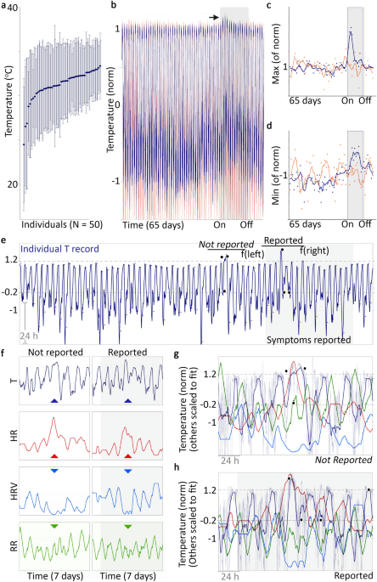
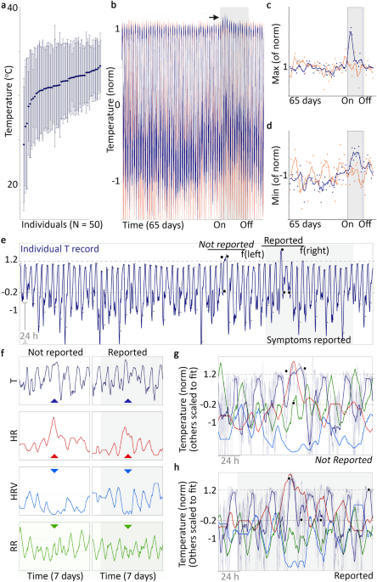
Elevated core temperature constitutes an important biomarker for COVID-19 infection; however, no standards currently exist to monitor fever using wearable peripheral temperature sensors. Evidence that sensors could be used to develop fever monitoring capabilities would enable large-scale health-monitoring research and provide high-temporal resolution data on fever responses across heterogeneous populations. We launched the TemPredict study in March of 2020 to capture continuous physiological data, including peripheral temperature, from a commercially available wearable device during the novel coronavirus pandemic. We coupled these data with symptom reports and COVID-19 diagnosis data. Here we report findings from the first 50 subjects who reported COVID-19 infections. These cases provide the first evidence that illness-associated elevations in peripheral temperature are observable using wearable devices and correlate with self-reported fever. Our analyses support the hypothesis that wearable sensors can detect illnesses in the absence of symptom recognition. Finally, these data support the hypothesis that prediction of illness onset is possible using continuously generated physiological data collected by wearable sensors. Our findings should encourage further research into the role of wearable sensors in public health efforts aimed at illness detection, and underscore the importance of integrating temperature sensors into commercially available wearables.
Lire l'article complet sur : www.nature.com
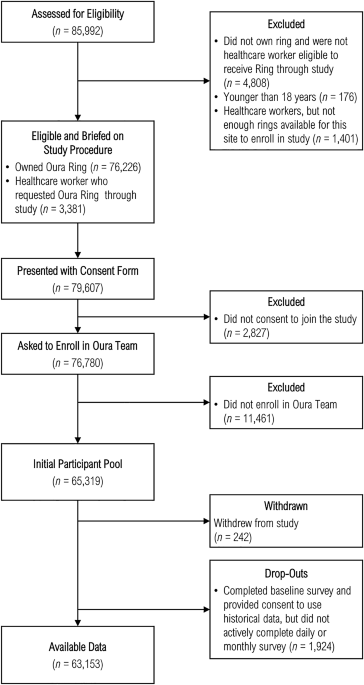
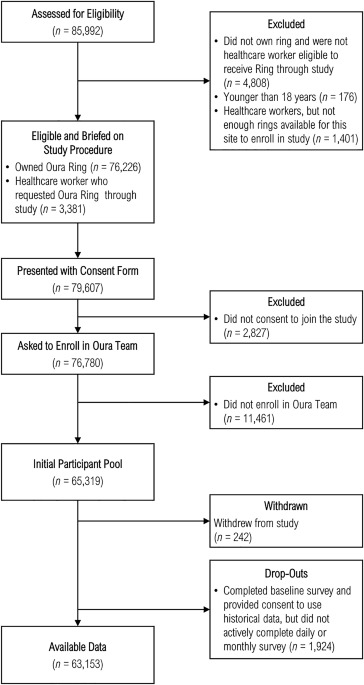
Early detection of diseases such as COVID-19 could be a critical tool in reducing disease transmission by helping individuals recognize when they should self-isolate, seek testing, and obtain early medical intervention. Consumer wearable devices that continuously measure physiological metrics hold promise as tools for early illness detection. We gathered daily questionnaire data and physiological data using a consumer wearable (Oura Ring) from 63,153 participants, of whom 704 self-reported possible COVID-19 disease. We selected 73 of these 704 participants with reliable confirmation of COVID-19 by PCR testing and high-quality physiological data for algorithm training to identify onset of COVID-19 using machine learning classification. The algorithm identified COVID-19 an average of 2.75 days before participants sought diagnostic testing with a sensitivity of 82% and specificity of 63%. The receiving operating characteristic (ROC) area under the curve (AUC) was 0.819 (95% CI [0.809, 0.830]). Including continuous temperature yielded an AUC 4.9% higher than without this feature. For further validation, we obtained SARS CoV-2 antibody in a subset of participants and identified 10 additional participants who self-reported COVID-19 disease with antibody confirmation. The algorithm had an overall ROC AUC of 0.819 (95% CI [0.809, 0.830]), with a sensitivity of 90% and specificity of 80% in these additional participants. Finally, we observed substantial variation in accuracy based on age and biological sex. Findings highlight the importance of including temperature assessment, using continuous physiological features for alignment, and including diverse populations in algorithm development to optimize accuracy in COVID-19 detection from wearables.
Lire l'article complet sur : www.nature.com
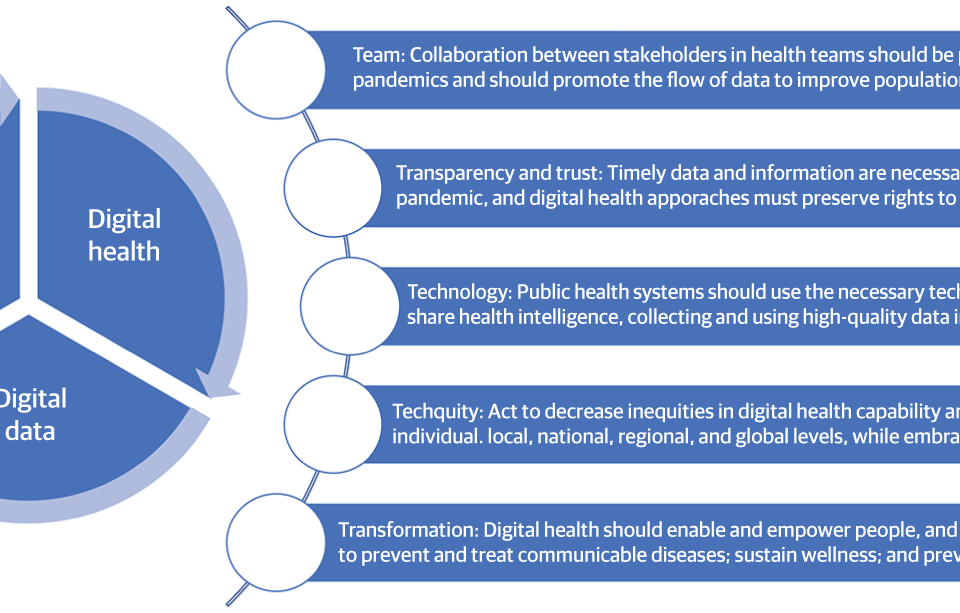
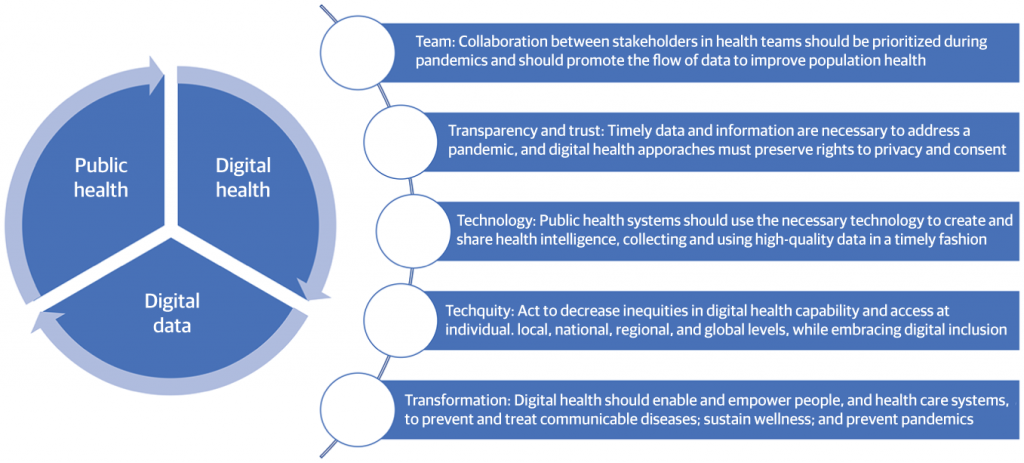
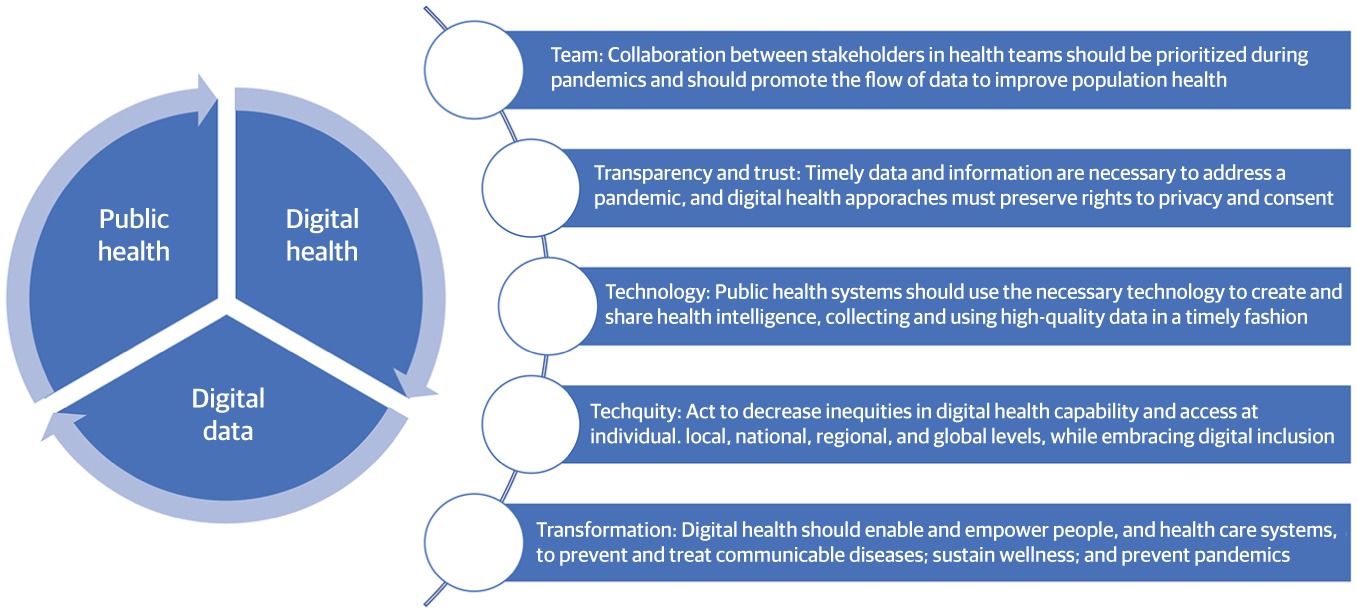
This consensus statement discusses how stakeholders, including governments, can implement digital health policy to prepare for and address current and future pandemics.
Lire l'article complet sur : jamanetwork.com
Imperial research has unveiled how COVID-19 symptoms varied between country and health condition in 2020 in partnership with symptom mapper Healthily. Looking at 190 countries, researchers from Imperial College London found that symptoms of COVID-19, including the initial trifecta of cough, fever,...
Lire l'article complet sur : www.imperial.ac.uk