

Pharmageek


The COVID-19 pandemic is the greatest public health crisis of the last 100 years. Countries have responded with various levels of lockdown to save lives and stop health systems from being overwhelmed. At the same time, lockdowns entail large socioeconomic costs.
One exit strategy under consideration is a mobile phone app that traces the close contacts of those infected with COVID-19.
Recent research has demonstrated the theoretical effectiveness of this solution in different disease settings. However, concerns have been raised about such apps because of the potential privacy implications. This could limit the acceptability of app-based contact tracing in the general population. As the effectiveness of this approach increases strongly with app uptake, it is crucial to understand public support for this intervention.
Objective: The objective of this study is to investigate the user
acceptability of a contact-tracing app in five countries hit by the pandemic.
Methods: We conducted a largescale, multicountry study (N=5995) to measure public support for the digital contact tracing of COVID-19 infections.
We ran anonymous online surveys in France, Germany, Italy, the United Kingdom, and the United States and measured intentions to use a contact-tracing app across different installation regimes (voluntary installation vs automatic installation by mobile phone providers) and studied how these intentions vary across individuals and countries.
Results: We found strong support for the app under both regimes, in all countries, across all subgroups of the population, and irrespective of regional-level COVID-19 mortality rates.We investigated the main factors that may hinder or facilitate uptake and found that concerns about cybersecurity and privacy, together with a lack of trust in the government, are the main barriers to adoption.
Conclusions:
Epidemiological evidence shows that app-based contact tracing can suppress the spread of COVID-19 if a high enough proportion of the population uses the app and that it can still reduce the number of infections if uptake is moderate. Our findings show that the willingness to install the app is very high. The available evidence suggests that app-based contact tracing may be a viable approach to control the diffusion of COVID-19.
read the study at https://mhealth.jmir.org/2020/8/e19857
Lire l'article complet sur : mhealth.jmir.org


We discuss the concept of a participatory digital contact notification approach to assist tracing of contacts who are exposed to confirmed cases of coronavirus disease (COVID-19);
The core functionality of our concept is to provide a usable, labor-saving tool for contact tracing by confirmed cases themselves
the approach is simple and affordable for countries with limited access to health care resources and advanced technology.
The proposed tool serves as a supplemental contract tracing approach to counteract the shortage of health care staff while providing privacy protection for both cases and contacts.
- This tool can be deployed on the internet or as a plugin for a smartphone app.
- Confirmed cases with COVID-19 can use this tool to provide contact information (either email addresses or mobile phone numbers) of close contacts.
- The system will then automatically send a message to the contacts informing them of their contact status, what this status means, the actions that should follow (eg, self-quarantine, respiratory hygiene/cough etiquette), and advice for receiving early care if they develop symptoms.
- The name of the sender of the notification message by email or mobile phone can be anonymous or not.
- The message received by the contact contains no disease information but contains a security code for the contact to log on the platform to retrieve the information.
Conclusion
The successful application of this tool relies heavily on public social responsibility and credibility, and it remains to be seen if the public would adopt such a tool and what mechanisms are required to prevent misuse.
This is a simple tool that does not require complicated computer techniques despite strict user privacy protection design with respect to countries and regions. Additionally, this tool can help avoid coercive surveillance, facilitate the allocation of health resources, and prioritize clinical service for patients with COVID-19. Information obtained from the platform can also increase our understanding of the epidemiology of COVID-19.
read this concept paper at https://mhealth.jmir.org/2020/6/e20369
Lire l'article complet sur : mhealth.jmir.org
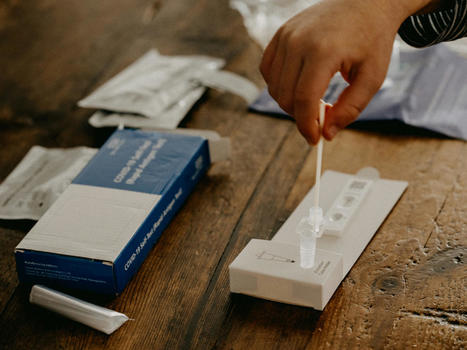
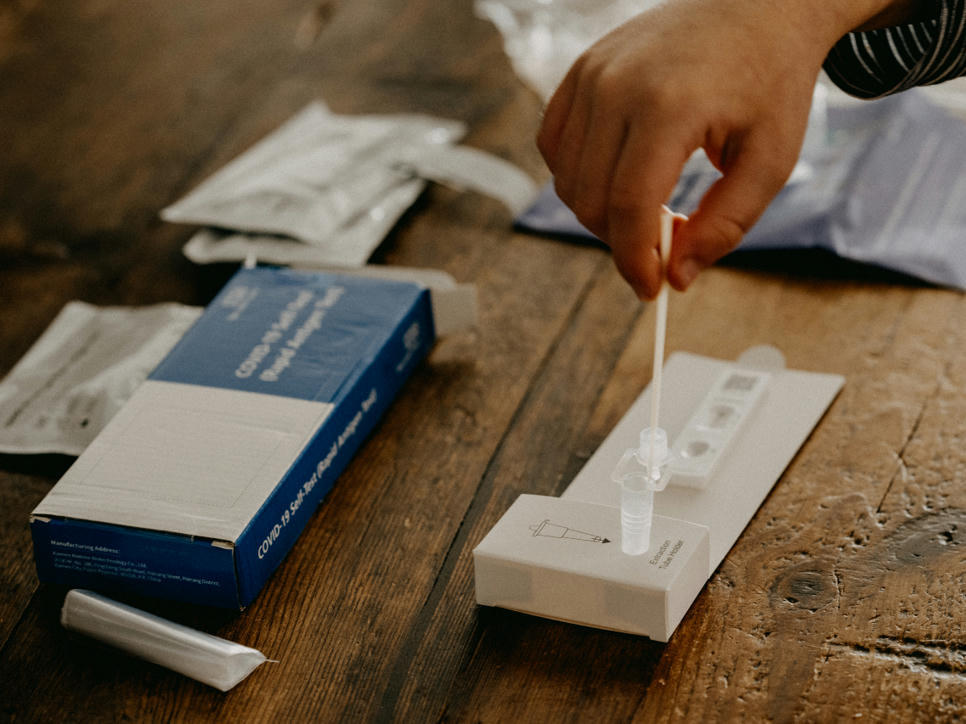
Social media is a popular source of information about health, including COVID-19 and testing information. One of the most popular communication channels used by adolescents and young adults who search for health information is TikTok—an emerging social media platform.
Objective: The purpose of this study was to describe TikTok videos related to COVID-19 testing.
Methods: The hashtag #covidtesting was searched, and the first 100 videos were included in the study sample. At the time the sample was drawn, these 100 videos garnered more than 50% of the views for all videos cataloged under the hashtag #covidtesting.
The content characteristics that were coded included mentions, displays, or suggestions of anxiety, COVID-19 symptoms, quarantine, types of tests, results of test, and disgust/unpleasantness. Additional data that were coded included the number and percentage of views, likes, and comments and the use of music, dance, and humor.
Results: The 100 videos garnered more than 103 million views; 111,000 comments; and over 12.8 million likes. Even though only 44 videos mentioned or suggested disgust/unpleasantness and 44 mentioned or suggested anxiety, those that portrayed tests as disgusting/unpleasant garnered over 70% of the total cumulative number of views (73,479,400/103,071,900, 71.29%) and likes (9,354,691/12,872,505, 72.67%), and those that mentioned or suggested anxiety attracted about 60% of the total cumulative number of views (61,423,500/103,071,900, 59.59%) and more than 8 million likes (8,339,598/12,872,505, 64.79%). Independent one-tailed t tests (α=.05) revealed that videos that mentioned or suggested that COVID-19 testing was disgusting/unpleasant were associated with receiving a higher number of views and likes.
Conclusions: Our finding of an association between TikTok videos that mentioned or suggested that COVID-19 tests were disgusting/unpleasant and these videos’ propensity to garner views and likes is of concern. There is a need for public health agencies to recognize and address connotations of COVID-19 testing on social media.
read the study report at https://publichealth.jmir.org/2021/6/e29528/
Lire l'article complet sur : publichealth.jmir.org


Ces certificats ont commencé à être délivrés dans neuf pays, a précisé l’exécutif européen. Il s’agit de la Bulgarie, la Croatie, la République tchèque, le Danemark, l’Allemagne, la Grèce, la Pologne, la Lituanie et l’Espagne, selon cette source.
Lire l'article complet sur : www.frenchweb.fr