

Pharmageek
Covidtracker, Vaccintracker, Vitemadose et désormais Chronodose: Guillaume Rozier a créé, seul puis avec d’autres bénévoles, des services internet gratuits anti-Covid. Face à leur grand succès public, le jeune homme se dit lui-même surpris par « la créativité qui émane des données ». À partir de mercredi, Chronodose, le petit dernier de la série, permettra de chercher un rendez-vous de vaccination resté disponible le jour même ou le lendemain. Il permettra ainsi à tous les adultes de profiter facilement de la décision du gouvernement d’ouvrir à tous les plus de 18 ans, sans condition d’âge ou de santé, les créneaux de vaccination non pris le jour suivant.
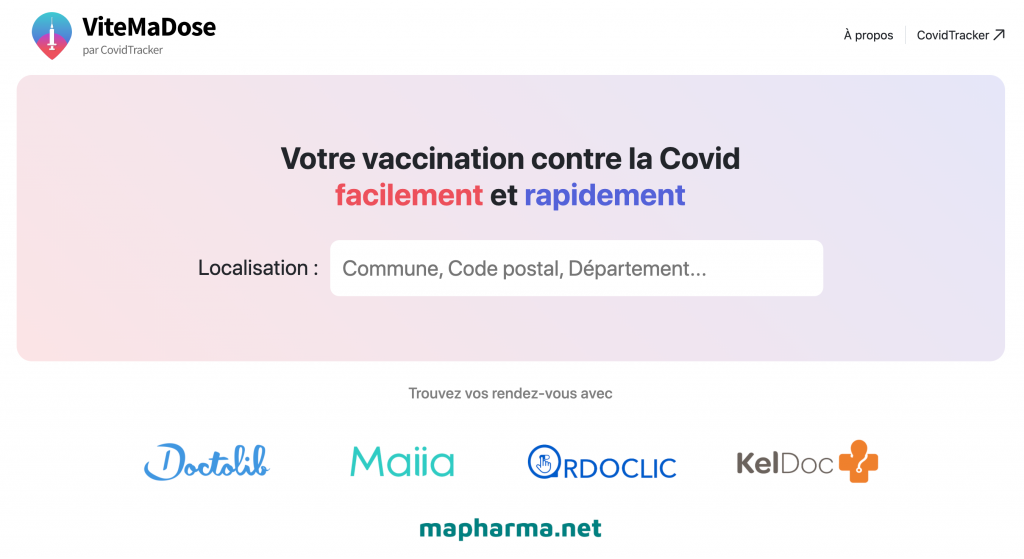
« Chaque jour il y a encore quelques milliers de créneaux de vaccination non pourvus pour le jour même et le lendemain » indique à l’AFP Guillaume Rozier, 25 ans. Chronodose sera une fonctionnalité supplémentaire de Vitemadose. Lancé début avril, ce site internet permet d’avoir en un seul coup d’oeil les créneaux disponibles sur les différentes plateformes de rendez-vous, Doctolib, Keldoc, Maiia, Ordoclic ou MaPharma. Vitemadose – salué par Emmanuel Macron lui-même – a été créé par Guillaume Rozier avec le concours d’une centaine de bénévoles, après le succès public de Covidtracker, le site de suivi de l’évolution de la pandémie qui l’a fait connaître.
Lire l'article complet sur : www.frenchweb.fr
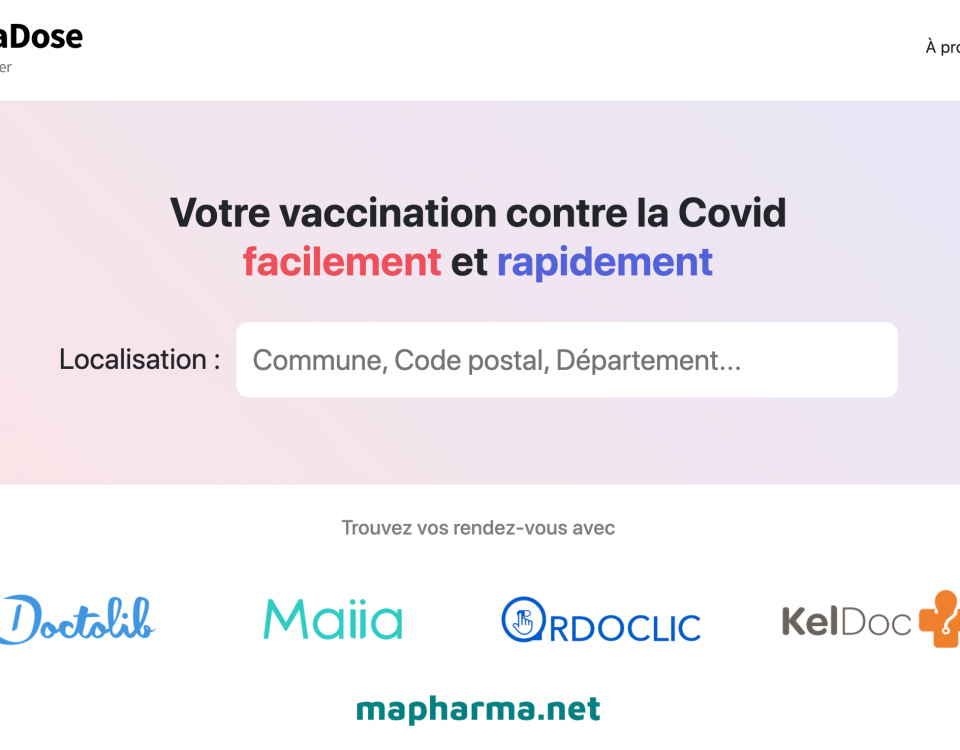
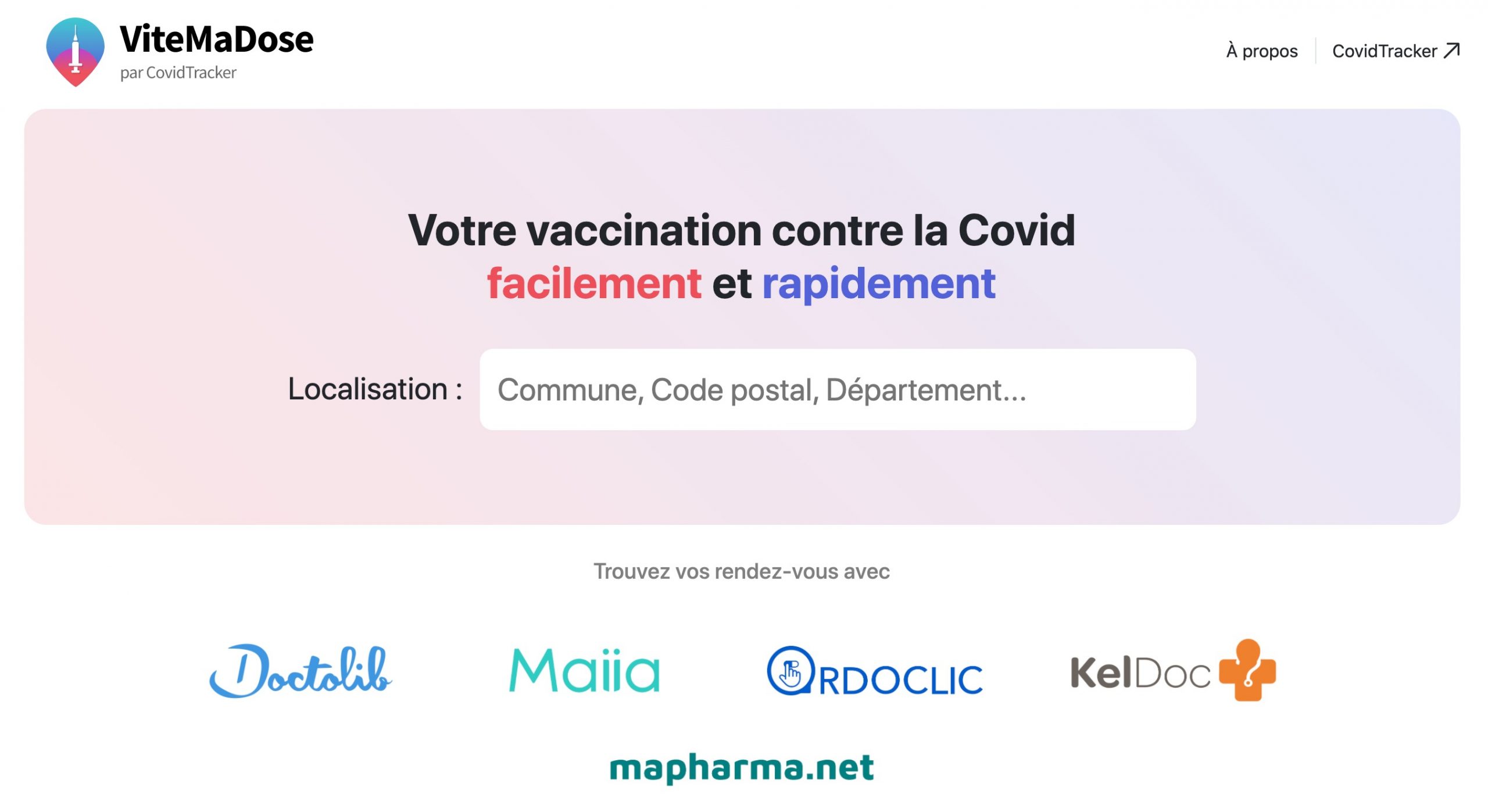
Le site qui répertorie la majorité des centres de vaccination Covid-19 en France et vous permet de trouver un créneau de vaccination ou une chronodose Pfizer-BioNTech, Moderna, AstraZeneca ou Janssen dans un centre de vaccination proche de chez vous.
Lire l'article complet sur : vitemadose.covidtracker.fr
Since the start of the pandemic, new technologies have been developed to help reduce the spread of the infection.
Some of the most common safety measures today include measuring a person’s temperature, covering your nose and mouth with a mask, contact tracing, disinfection, and social distancing. Many businesses have adopted various technologies, including those with artificial intelligence (AI) underneath, helping to adhere to the COVID-19 safety measures.
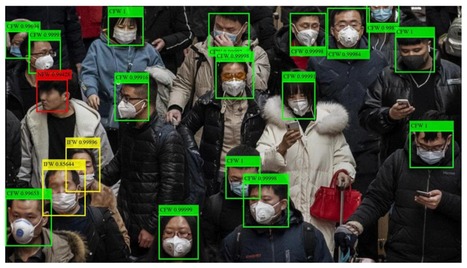
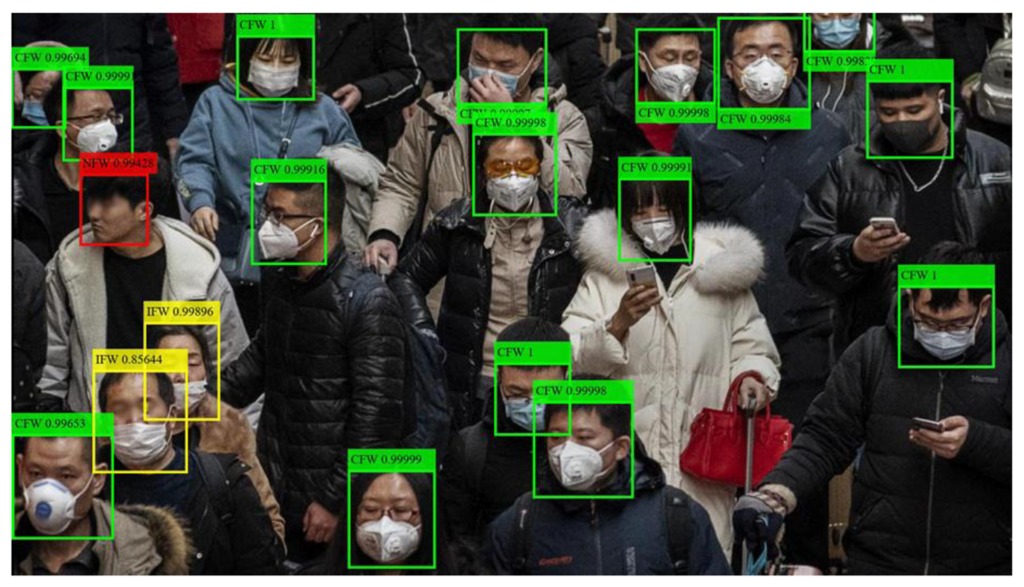
As an example, numerous airlines, hotels, subways, shopping malls, and other institutions are already using thermal cameras to measure an individual’s temperature before people are allowed entry. In its turn, public transport in France relies on AI-based surveillance cameras to monitor whether or not people are social-distancing or wearing masks. Another example is requiring the download of contact-tracing apps delivered by governments across the globe.
However, there are a number of issues.
While many of these solutions help to ensure that COVID-19 prevention practices are observed, many of them have flaws or limits. In this article, we will cover some of the issues creating obstacles for fighting the pandemic.
Issue #1. Manual temperature scanning is tricky
Issue #2. Monitoring crowds is even more complex
Issue #3. Contact tracing leads to privacy concerns
Issue #4. UV rays harm eyes and skin
Issue #5. UVC robots are extremely expensive
Issue #6. No integration, no compliance, no transparency
Regardless of the safety measures in place and existing issues, innovations are already playing a vital role in the fight against COVID-19. By improving on existing technology, we can make everyone safer as we all adjust to the new normal.
read the details at https://www.altoros.com/blog/whats-wrong-with-ai-tools-and-devices-preventing-covid-19/
Lire l'article complet sur : www.altoros.com
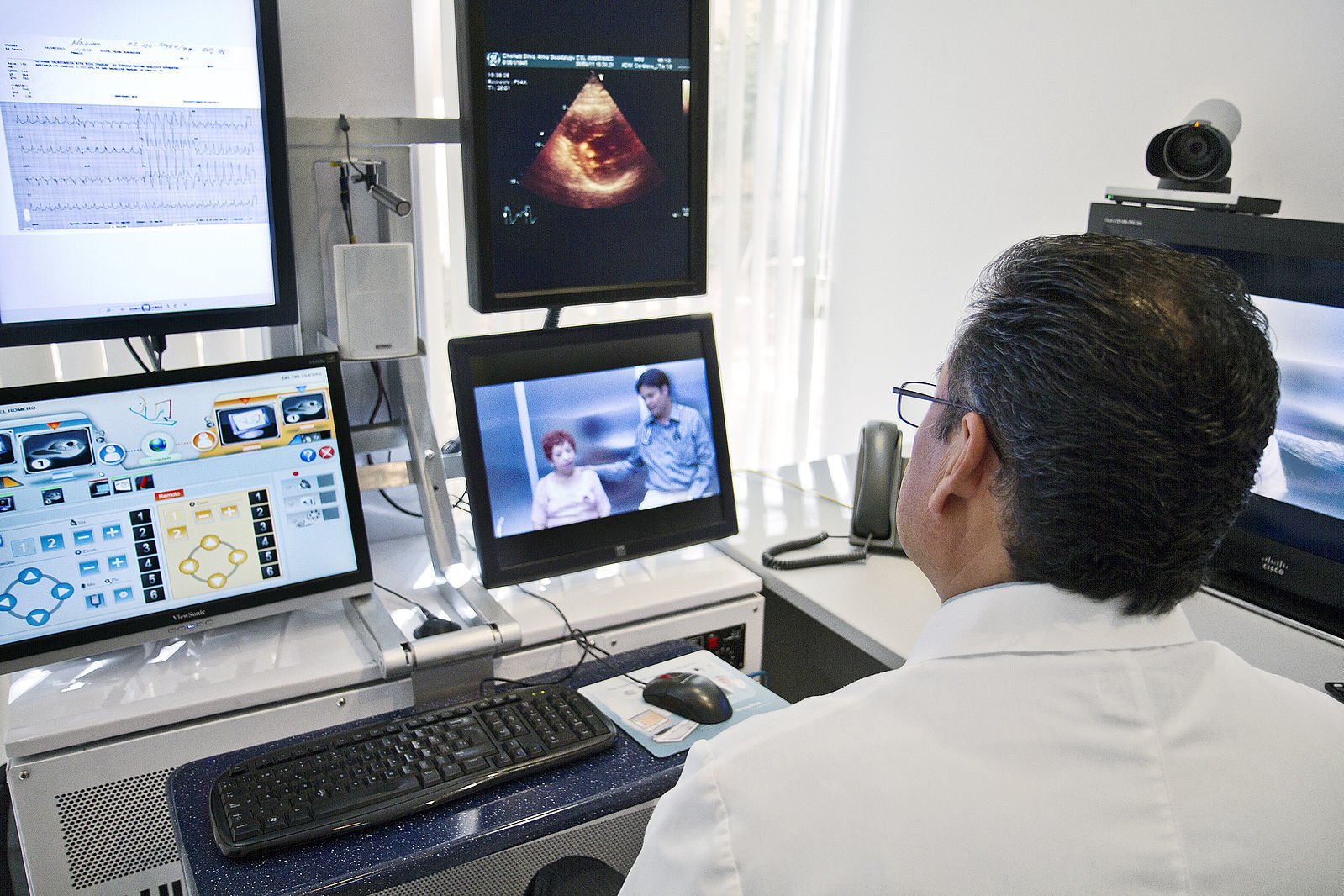
Previous work has specifically described the potential for using telemedicine in disasters and public health emergencies. No telemedicine program can be created overnight, but U.S. health systems that have already implemented telemedical innovations can leverage them for the response to Covid-19.
A central strategy for health care surge control is “forward triage” — the sorting of patients before they arrive in the emergency department (ED).
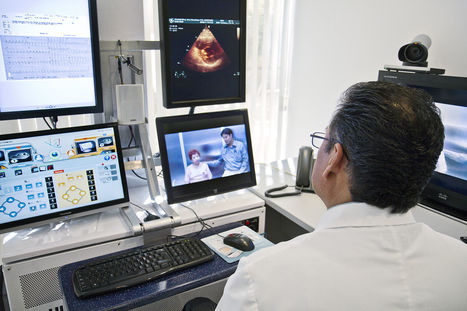
Direct-to-consumer (or on-demand) telemedicine, a 21st-century approach to forward triage that allows patients to be efficiently screened, is both patient-centered and conducive to self-quarantine, and it protects patients, clinicians, and the community from exposure. It can allow physicians and patients to communicate 24/7, using smartphones or webcam-enabled computers.
Respiratory symptoms — which may be early signs of Covid-19 — are among the conditions most commonly evaluated with this approach. Health care providers can easily obtain detailed travel and exposure histories. Automated screening algorithms can be built into the intake process, and local epidemiologic information can be used to standardize screening and practice patterns across providers.
Much medical decision making is cognitive, and telemedicine can provide rapid access to subspecialists who aren’t immediately available in person.
Recognizing that patients prioritize convenient and inexpensive care, Duffy and Lee recently asked whether in-person visits should become the second, third, or even last option for meeting patient needs
read the original article at https://www.nejm.org/doi/10.1056/NEJMp2003539
Lire l'article complet sur : www.nejm.org