

Scoop.it
25/05/2020


🧰 L’alliance digitale contre le COVID-19 présente OutilsCoronavirus.fr – la base open-source référençant les sites francophones d’informations médicales et d’outils digitaux pour lutter contre le COVID-19.
Source: www.epilogue-covid.org
25/05/2020
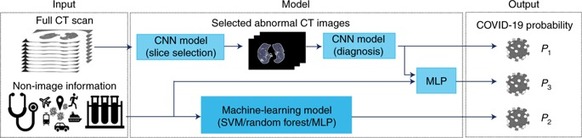
For diagnosis of coronavirus disease 2019 (COVID-19), a SARS-CoV-2 virus-specific reverse transcriptase polymerase chain reaction (RT–PCR) test is routinely used. However, this test can take up to 2 d to complete, serial testing may be required to rule out the possibility of false negative results and there is currently a shortage of RT–PCR test kits, underscoring the urgent need for alternative methods for rapid and accurate diagnosis of patients with COVID-19. Chest computed tomography (CT) is a valuable component in the evaluation of patients with suspected SARS-CoV-2 infection. Nevertheless, CT alone may have limited negative predictive value for ruling out SARS-CoV-2 infection, as some patients may have normal radiological findings at early stages of the disease. In this study, we used artificial intelligence (AI) algorithms to integrate chest CT findings with clinical symptoms, exposure history and laboratory testing to rapidly diagnose patients who are positive for COVID-19. Among a total of 905 patients tested by real-time RT–PCR assay and next-generation sequencing RT–PCR, 419 (46.3%) tested positive for SARS-CoV-2. In a test set of 279 patients, the AI system achieved an area under the curve of 0.92 and had equal sensitivity as compared to a senior thoracic radiologist. The AI system also improved the detection of patients who were positive for COVID-19 via RT–PCR who presented with normal CT scans, correctly identifying 17 of 25 (68%) patients, whereas radiologists classified all of these patients as COVID-19 negative. When CT scans and associated clinical history are available, the proposed AI system can help to rapidly diagnose COVID-19 patients. Artificial intelligence algorithms integrating chest computed tomography scans and clinical information can diagnose COVID-19 with similar accuracy as compared to a senior radiologist.
Source: www.nature.com
25/05/2020

The rapid digital adoption driven by COVID-19 will continue into the recovery. Here’s how to accelerate your organization’s digital capabilities to keep pace.
Source: www.mckinsey.com
25/05/2020
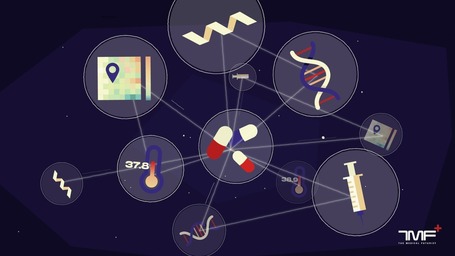
COVID-19 forced stakeholders in the healthcare landscape to adopt a new perspective in this sphere. Telemedicine rose to fame as a ready-made solution; artificial intelligence’s contribution became more apparent from early outbreak predictions to resource management; and digital health technologies lent a helping hand early on.
Another promising area joining the fight is network medicine, a branch of network science. The latter field studies the interaction between actors within a network. Such analyses are applicable to virtually any sector, from the world wide web through social networks to how molecules interact with each other. Applying such theories to human biology yields network medicine; the study of biological networks to better understand and help treat diseases.
One of network medicine’s pioneers is Albert-László Barabási, a distinguished university professor at Northeastern University in Boston, and his research lab, the BarabasiLab. In less than 10 days since repurposing their network medicine toolset to find a treatment for COVID-19, the BarabasiLab had a list of promising drugs for testing in human cell lines in an experimental lab. We turned to Prof. Barabási for additional insights regarding network medicine’s contribution in the COVID-19 fight. But first, let’s get acquainted with the science in question before turning to the scientists behind it.
Source: medicalfuturist.com