

Scoop.it

Why COVID-19 is so hard to Track
Seeker sat down with two professors of medicine to find out how COVID-19 attacks our bodies and why it’s so hard to track and control
Credit Now This
Source: www.technology-in-business.net
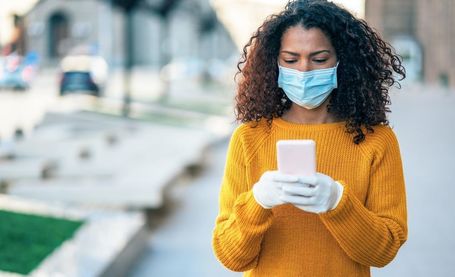
As Facebook uses artificial intelligence to moderate Covid-19 misinformation, marketers continue to grapple with how to advertise around the crisis both on and off the platform.
This week, the social network revealed it had placed misinformation warning labels on 50 million pieces of content related to the coronavirus in April while also removing hundreds of thousands of other posts. During a conference call with reporters on Tuesday, Facebook CEO Mark Zuckerberg said the company puts Covid-19 misinformation in two categories: One for removing content that might lead to physical harm, and another for more general misinformation based on fact checking by third parties.
Facebook is using machine learning to identify and label content, and Zuckerberg said the users don’t click on posts they see 95% of the time when there’s a misinformation warning attached. The company also removed 2.5 million pieces of content related to the sale of masks, cleaning wipes and Covid-19 test kits.
“The challenge here is that for everyone trying to exploit misinformation, there are also a lot of people who are actually trying to help and get masks and other equipment to people who really need it,” Zuckerberg said.
Source: www.forbes.com
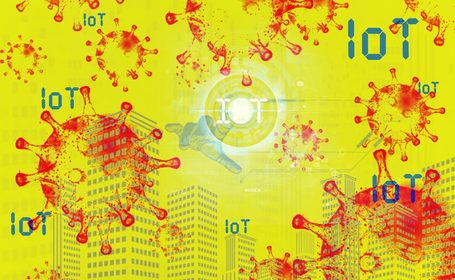
Because of the COVID19 pandemic, the modification and deployment of IoT devices to support the healthcare sector has advanced rapidly.
Source: www.iotforall.com

Using machine learning, scientists may be able to assess the role climate and environmental variables play in the transmission of COVID-19.
A team from Lawrence Berkeley National Laboratory is applying machine learning methods to health and environmental datasets to determine whether the virus fades in warmer months and surges once it gets colder – similar to the flu.
“Environmental variables, such as temperature, humidity, and UV exposure, can have an effect on the virus directly, in terms of its viability. They can also affect the transmission of the virus and the formation of aerosols,” said Berkeley Lab scientist Eoin Brodie, the project lead.
“We will use state-of-the-art machine-learning methods to separate the contributions of social factors from the environmental factors to attempt to identify those environmental variables to which disease dynamics are most sensitive.”
Researchers will leverage county-level data, including the severity, distribution, and duration of the COVID-19 outbreak, and what public health interventions were issued when. The team will also analyze demographics, climate and weather factors, and population mobility dynamics.
Source: healthitanalytics.com