
Scoop.it
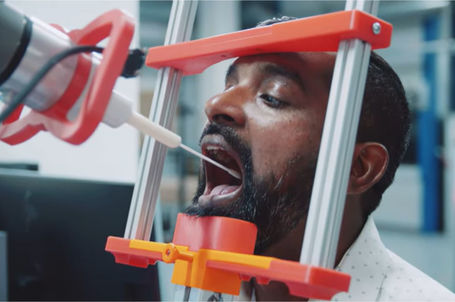
Pour réduire le temps d'exposition au virus du personnel soignant, des chercheurs de l'Université du Danemark du Sud ont développé un robot de dépistage. Il devrait être testé sur des patients d'ici la fin juin et commercialisé dès cet automne pour anticiper l'arrivée d'une deuxième vague.
Source: www.usine-digitale.fr
Blood plasma from patients who have recovered from COVID-19 holds promise as a potential treatment that could save lives. But, currently, there's a shortage of donors.
Now, a cross-industry coalition that includes the Mayo Clinic, Johns Hopkins University, Anthem, LabCorp, plasma companies, blood centers and Microsoft is working to help mobilize thousands of people in the U.S. who have recovered from COVID-19 to donate their blood plasma.
This effort, called The Fight Is In Us, aims to support the rapid development of potential new therapies for patients with COVID-19.
"Roughly speaking, we want every single person who has recently recovered from COVID to donate plasma," said Peter Lee, corporate vice president of Microsoft Research and Incubation, speaking with CNBC's health tech reporter Christina Farr Thursday during a Facebook live interview.
"If there is a second wave, we’re going to need every last bit of convalescent plasma," Lee said.
Ongoing research suggests the use of antibody-rich blood plasma, also called convalescent plasma, to treat severely ill COVID-19 patients could help in the fight against the virus until there is a vaccine.
Source: www.fiercehealthcare.com
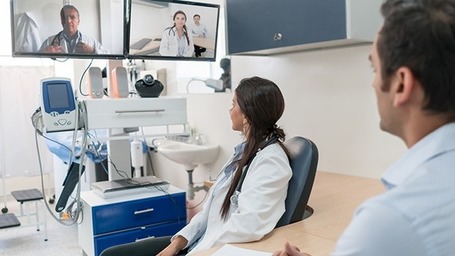
Contactless monitoring systems and smartphone health applications are playing a vital role in the war against COVID-19, a report has found.
According to the analysis by Frost & Sullivan, non-contact patient monitoring technologies are gravitating toward the use of video, sound analysis and mobile-based platforms incorporating advanced technologies such as machine learning and artificial intelligence (AI) algorithms.
It predicts a shift away from wearable technology, which it says can be uncomfortable, expensive and have limited usage, in favour of non-contact technology which have the advantages of being multi-use and affordable.
The report, Advanced Non-contact Patient Monitoring Technologies: A New Paradigm in Healthcare Monitoring, is available as part of Frost & Sullivan’s global TechVision Growth Partnership Service programme.
Source: www.healthcareitnews.com